data engineering
race telemetry pipeline
Two Formula SAE cars, different logger formats, one pipeline from raw CSV exports to a TimescaleDB warehouse, typed API, and Power BI dashboards.
repeatable ingestion across two car platforms
- my contribution
- Designed and built parsing, ingestion, database model, API, dashboards, and validation.
- project status
- Implemented · historical 2023 and 2026 datasets
the problem
the 2023 combustion car used an AiM logger; the 2026 electric car used CAN exports with a different channel set. raw files needed a consistent path into analysis without treating the two cars as identical.
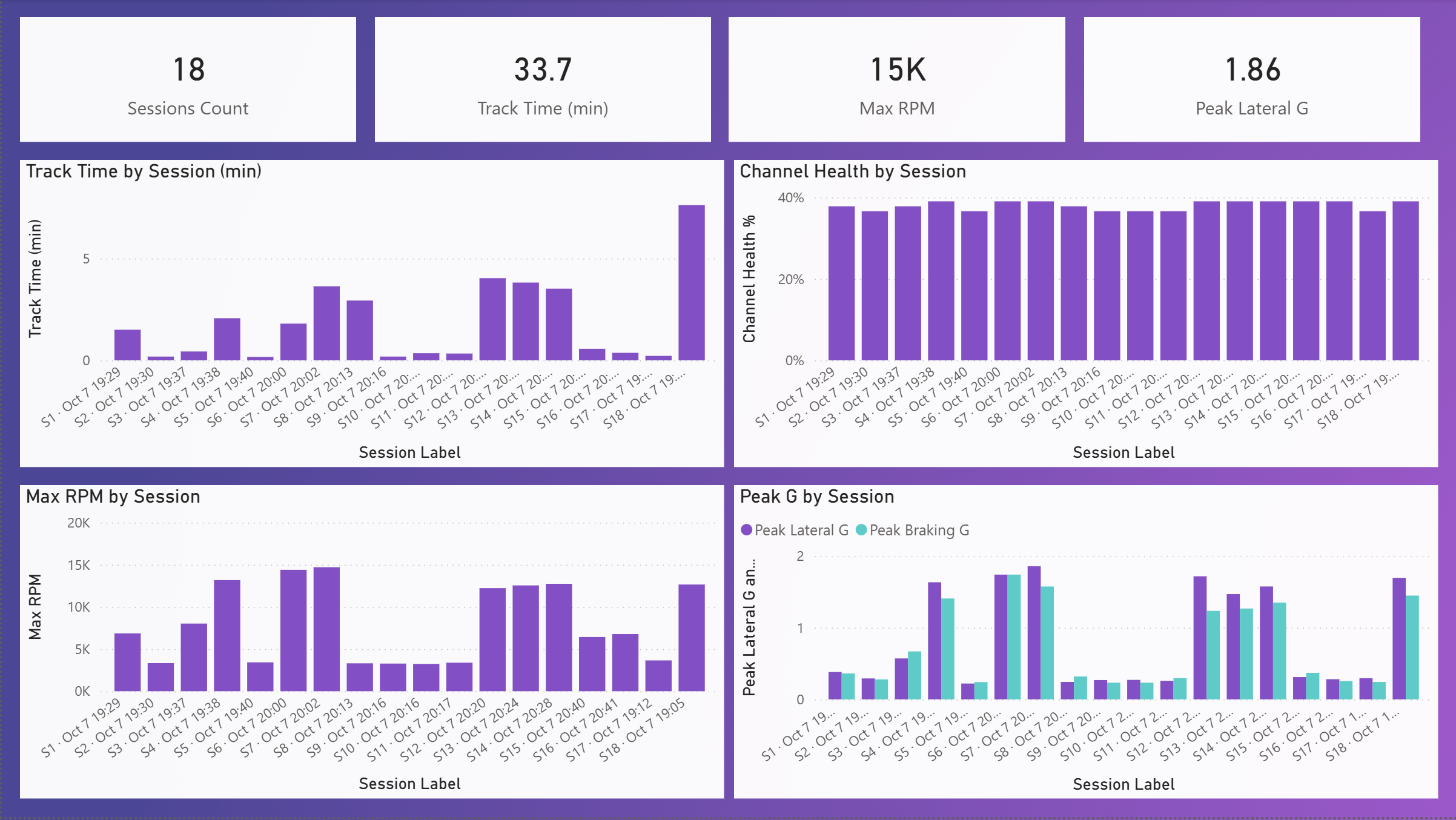
current corpus covers 18 sessions from October 7, 2023, and 26 files from the July 18, 2026 drive day. file count and session count are different units.
engineering decisions
- safe reruns. content hashes identify previously ingested files. source-path attribution preserves where duplicate files came from.
- isolated failures. a malformed file fails independently so remaining sessions can load.
- one serving contract. a TimescaleDB hypertable and 1 Hz aggregate feed typed FastAPI responses. Power BI contract tests check requested columns against response models.
- different cars, explicit identity. platform and event fields distinguish datasets; sensor specifications stay specific to each car.
verification
CI runs lint, database-free checks, and the full suite against a pinned TimescaleDB service. a preflight assertion prevents database tests from silently skipping. database tests use a separate test database.
committed data profiles capture channel sets, sample spacing, duplicate groups, and extremes. CI compares fresh profiles with those baselines to catch changes in incoming data.
what the data showed
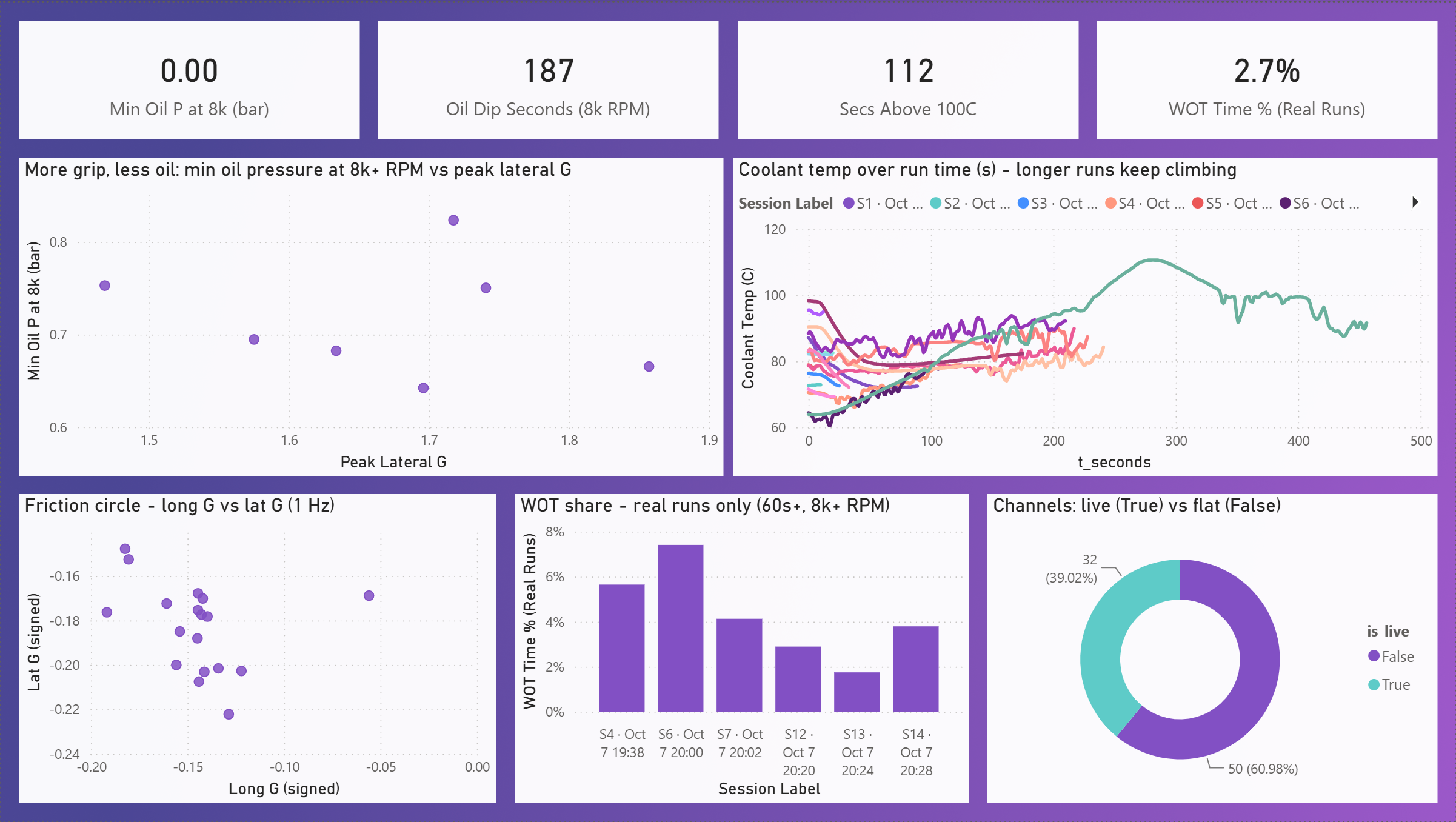
historical 2023 analysis surfaced oil-pressure dips under cornering, cooling limits, and dead channels. 2026 analysis surfaced low coolant flow, inverter overcurrent trips, and a channel labeled Pack_SOC that represented temperature. these findings show why validation matters before dashboard interpretation.